Asbestos considerations for Pleasanton homes
1960s to 1980s neighborhoods
About 16,900 of Pleasanton's roughly 29,000 homes were built between 1960 and 1989, so most remodels outside the newer subdivisions involve a house from that era. In Dublin most housing dates from 1990 or later; in Pleasanton a project is more likely to meet sprayed ceilings, early resilient flooring and older duct insulation. The city also has about 440 mobile homes, around 1.5% of its housing, and older manufactured homes have their own suspect ceiling panels, flooring and duct materials.
Downtown and older commercial buildings
Pleasanton grew from a farming town into a bedroom community and corporate center after World War II, and its downtown along Main Street was redesigned for pedestrians in the 1990s. Behind those storefronts are buildings of many ages, some much older than the tracts around them. Restaurant, retail and office renovations there need the full certified survey, which covers nonfriable materials such as roofing, floor tile and plaster; plaster and stucco are unregulated while intact but become regulated when demolished.
Planning a Pleasanton asbestos project
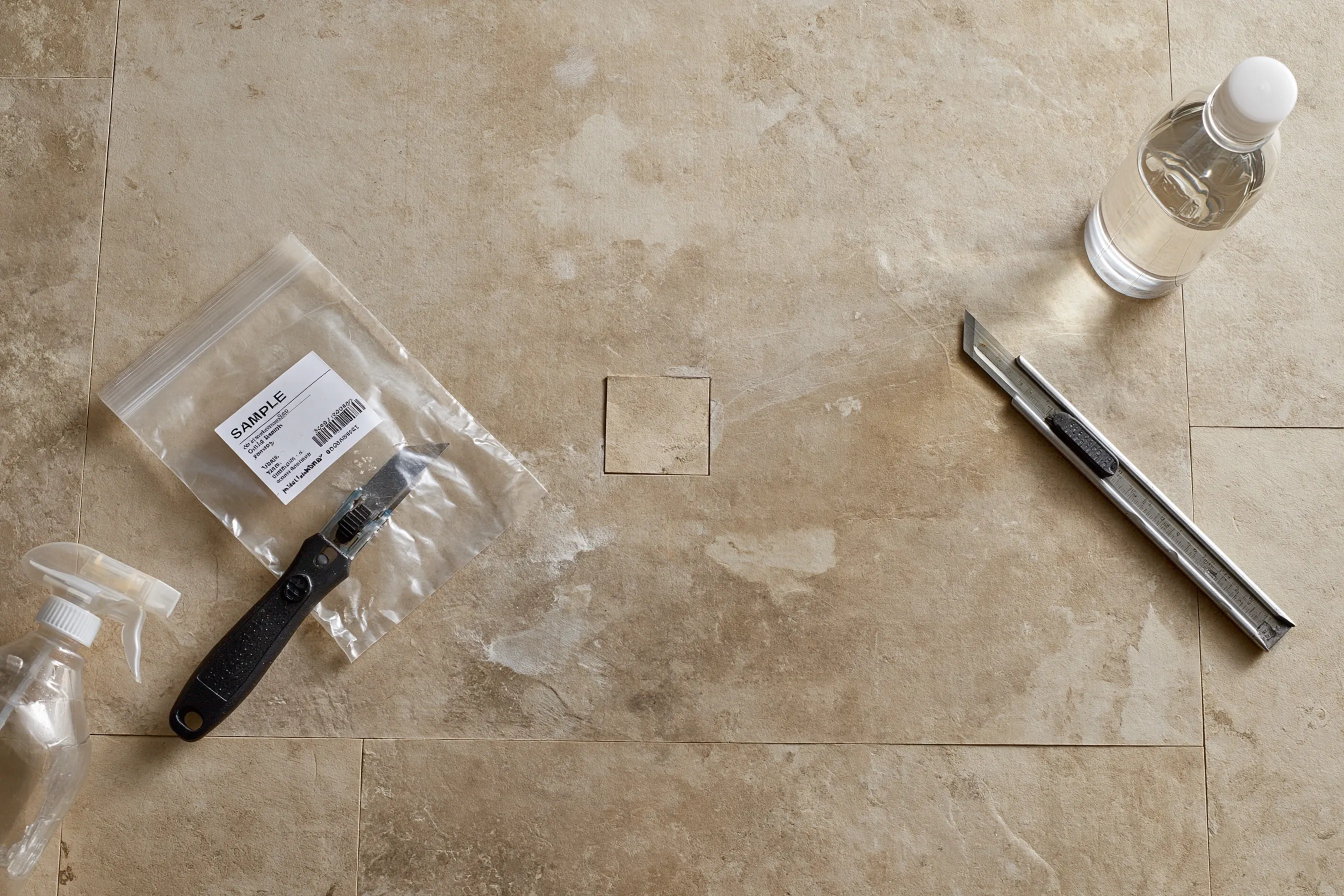
Start with the scope: the rooms involved, the materials the work will touch, and whether anything is being demolished. For a house or building of up to four units, Regulation 11 Rule 2 asks for a sample and lab test of any duct system, acoustic ceiling or plaster, textured or skim-coated wall, cement siding or stucco, or resilient flooring the work will disturb, and the owner may take those samples. Buildings of five or more units, and all commercial property, need a survey by a DOSH-certified consultant.
When positive material reaches 100 square feet, 100 linear feet or 35 cubic feet, or any of it is removed dry, the district needs notice ten working days ahead, or 72 hours with an added fee for homes of up to four units. Friable waste with 1% or more asbestos is hazardous waste in California and leaves with a licensed transporter under a waste shipment record.
Frequently asked questions
Which materials must be tested before a Pleasanton remodel?
For a single-family home or a building of up to four units: HVAC ducting and systems, acoustic ceiling material or acoustic plaster, textured or skim-coated wall surfaces, cement siding or stucco, and resilient flooring, whenever the remodel will remove or disturb them. The district rule asks for no other tests in those buildings, though EPA still recommends testing any suspect material a renovation will disturb. Larger residential and all commercial buildings need the full survey instead.
Does BAAQMD require notification to demolish a garage?
If the garage is load-bearing, yes. The district requires notice for every demolition of a load-supporting structure, even when no asbestos is present, and issues a Demolition J# once it accepts the notice. Check a detached garage's roofing, siding and stucco before it comes down, because demolition turns intact Category II materials into regulated material.
Is Pleasanton handled the same as Dublin?
The air district and Cal/OSHA rules are identical: both cities are in Alameda County and inside the Bay Area AQMD. What differs is the housing stock, which is older on average in Pleasanton, and the building permit process, which each city runs for itself.
Who is allowed to remove asbestos from a Pleasanton home?
For jobs involving 100 square feet or more, state licensing law generally requires the contractor to hold the C-22 asbestos abatement classification or the CSLB asbestos certification, with limited exceptions, and Cal/OSHA registration applies from the same size. An owner may legally remove material from their own home without certification, but the district strongly discourages it and the containment, negative-air, notification and licensed-transport rules still apply.
What affects the cost of asbestos removal in Pleasanton?
The main factors are which materials test positive and how much of each, ceiling height and access, whether drywall or flooring layers come out with the asbestos, the containment needed in an occupied home, and the waste class, since friable hazardous waste is handled under stricter transport and disposal rules than intact nonfriable debris. A survey or lab report is what turns a rough idea into a firm scope.
Livermore, the next city east on I-580, has about 15,300 homes from the 1950s through the 1970s, more than Pleasanton's 10,900 and over three times Dublin's 4,700, plus ranch and vineyard outbuildings that raise demolition questions. Our guide to asbestos removal in Livermore covers both, and the Dublin CA Asbestos Removal home page explains how we approach projects in Dublin itself.